

Since last month’s blog, the first of a series on leading a hybrid team successfully, we’ve run a survey on LinkedIn to better understand real life experiences of hybrid working currently. In this month’s blog we’ll share the highlights along with some considerations to support you in leading your hybrid team.
What you told us:
What best describes organisations’ approaches to hybrid working?
- 57% of respondents have implemented hybrid working by the organisation mandating a set number of days in the office
- 43% of respondents have implemented hybrid working at the full discretion of individual employees
- One respondent explained that non clinical staff are working mainly from home but there is no policy or guidance regarding any pattern
How did you devise your approach to hybrid working?
- For 50% of organisations, the approach was mandated from the top
- For 25% of organisations, teams were able to devise their own approach
- For 25% of organisations, individuals were given the autonomy to decide for themselves
Considerations
Organisations mandating a set number of days will benefit from considering how this best enables the right levels of collaboration and interaction within teams and between teams. Having some principles or guidelines for teams in deciding an approach that works for them can be helpful. There is some useful guidance from the CIPD more generally here: Hybrid Working Practical Guidance.and for managers here: Line manager guide on supporting hybrid working | CIPD.
While having some autonomy to decide your own approach to hybrid working is probably engaging for employees, there is a risk that some organisational needs could be missed so it is important to find a mutual solution that works for both organisation and individuals.
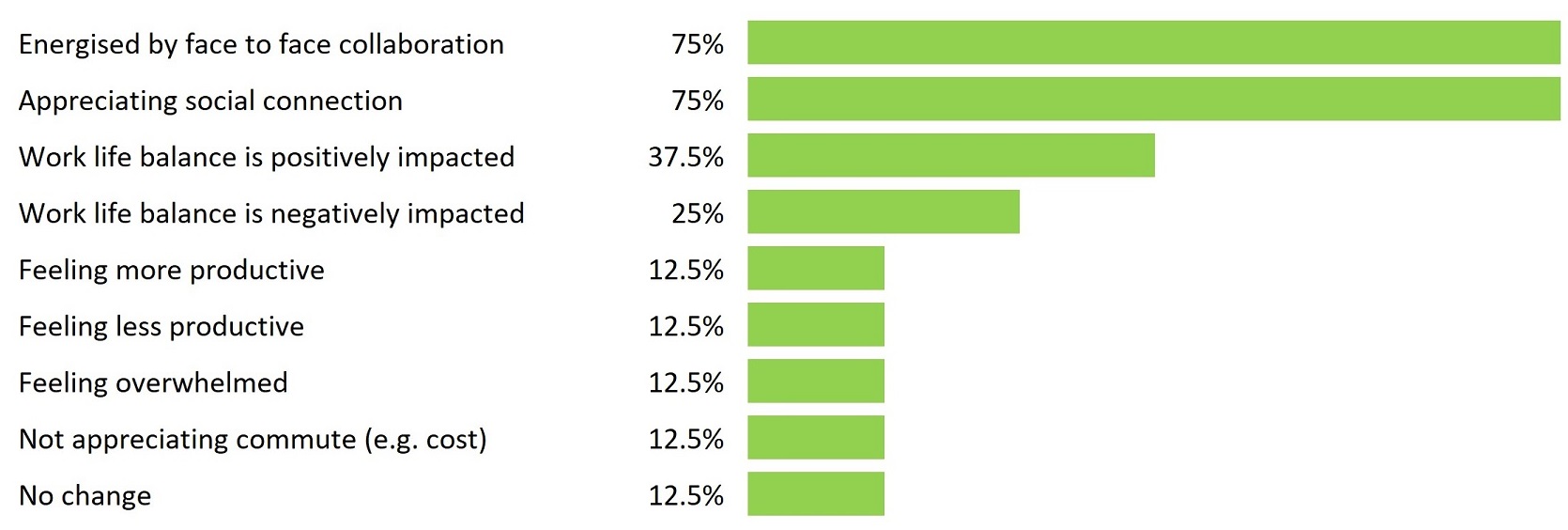
How do you think the team is experiencing the transition back to the office?
(Organisations could select more than one response)
What’s one thing that has been challenging for you about hybrid working?
It’s been challenging to make the shift to working back in the office after 2 years working at home; specific challenges included the time spent commuting, finding it hard to take breaks, increases in hours worked and the potential for loneliness.
The shift to hybrid meetings has been challenging and people have found it easier when meetings are fully face to face or fully virtual. We were also reminded that to run effective hybrid meetings, you need the right enabling technology. Finally, we heard that managers faced a new transition from face to face management to virtual management to the new world of hybrid people management; hybrid working may require a different set of skills and approaches rather than transposing what you do in a purely face to face or virtual environment into a hybrid environment and expecting it to work in the same way.
What’s one thing that has worked well for you about hybrid working?
The continuation of remote working is offering greater flexibility and sustaining improvements to work-life balance from not commuting every day. Increased wellbeing is also reported. From a team/organisational benefit perspective, respondents mentioned that hybrid working has enabled them to have time together to be creative and get to know one another better and that productivity and employee engagement have improved.
Considerations
Our survey shows that hybrid working brings both benefits and challenges and that these can be different for different people. In relation to the challenge of running hybrid meetings, a good rule of thumb is to hold meetings online by default if some members of the team are working in the office and some are working remotely. Good meeting design will ensure that those who are remote can have an equal opportunity to meaningfully contribute and be heard.
How equipped / how confident do you feel to lead your team while hybrid working?
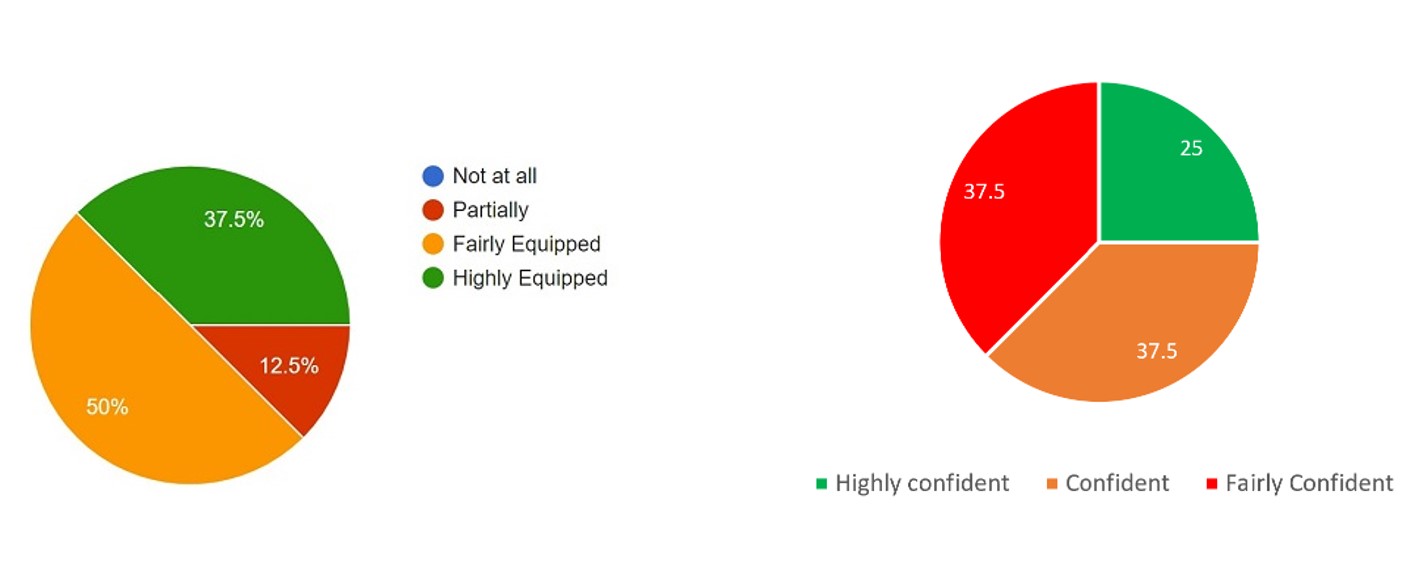
Only 37.5% of respondents felt highly equipped to lead their team while hybrid working and 37.5% were only fairly confident to lead their teams while hybrid working indicating that it would be of benefit to support manager and leaders to lead their teams through this transition to new ways of hybrid working. With that in mind, Geri and I will be running a free webinar in the autumn giving some guidance on what to consider including some practical tips.
In addition, next month, we’ll share more of our experience and external good practice in building cohesive, high performing hybrid teams. In the meantime, we encourage you to share your own tips on what is working for you so that others may benefit.

Leave a Reply