
Do you ever have those moments when you’re presenting or having an important conversation with someone senior in your organisation, and you start to lose the thread? You suddenly become more aware of what you’re thinking (those self doubt distractions) than what’s happening in the room.
It can be a disconcerting feeling – and it can really detract from the impact you make at a time when you really want to make an impact. In some cases, we even avoid putting ourselves into situations where we need to present or have those conversations, even though we know it would be the right thing to do.
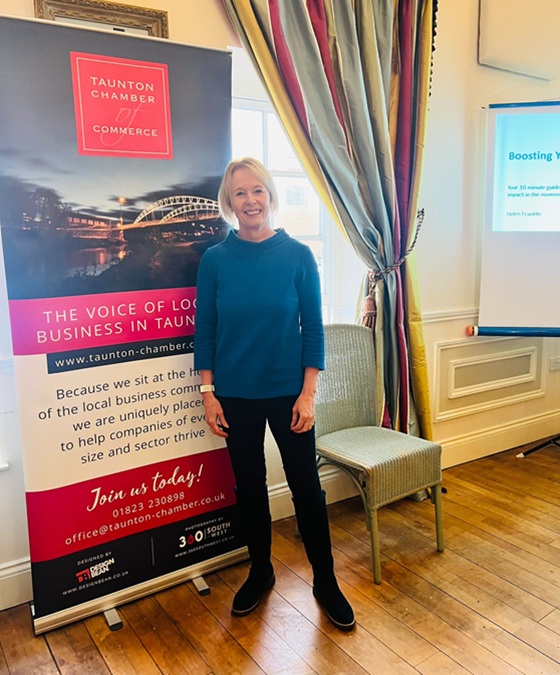
Last week, I gave a short 15‑minute interactive presentation at a Breakfast Buzz networking event on this very topic.
What I hadn’t fully appreciated until I arrived was that I was going to be using the very information I was sharing in order to have impact while presenting. It became one of those moments where the content and the experience folded into each other – a bit of an Inception moment (anyone else remember that 2010 Christopher Nolan mind‑bender?).
I’m an experienced trainer, facilitator and presenter, and I don’t really get nervous any more when I’ve prepared and I know my content. That’s a far cry from who I was as a university student, when I actually fainted outside a lecture room before a group presentation because I was so anxious.
The change came from years of gradually stretching my comfort zone – living Julie Smith’s confidence momentum cycle: act, learn, progress, feel more confident next time.
So it surprised me when, on arriving at the venue at 7.40am and chatting to the event manager while setting up, I noticed the tell‑tale signs of performance pressure: slightly shallow breathing, a raised heart rate, and my thoughts scanning for things that might go wrong (the small screen, where I might accidentally block someone’s view, and so on).
Thankfully, I recognised the signs. And in a slightly amused way, I reminded myself that I was fortunate to be living the very thing I was about to talk about – and that this was my chance to model the work in real time.
Here’s what I did:
- Moved from performance to experience: I reminded myself that if I saw this as a performance, I’d get pulled into a performance pressure cycle – inward thinking, self doubt, lack of presence, more pressure to perform. Instead, I needed to see it as an experience – something to notice, learn from and be present in.
- Regulated my physiology: While chatting over coffee, I slowed my breathing, dropped my shoulders, relaxed my jaw and focused fully on the person in front of me. Nothing dramatic – just small, intentional cues to settle my system.
- Anchored into my intentions: I reminded myself why I was there: to create something useful and interesting for those listening, and to build credibility with people I didn’t yet know. Role modelling what I was talking about was as good a way as any to do that and that’s the deliberate choice that I made.
As a result, during the presentation I felt far more present. I could sense a connection with the room. And when the familiar, internal doubting voice was asking “Are they with you? Is this making sense to them?”, I quietened it by sharing it out loud – showing the audience the inner workings. They laughed, I relaxed, and the whole thing felt more human.
The key takeaway from the short talk was that in order to be present and have impact when we feel ourselves being pulled into an unhelpful pressure cycle it helps to Regulate, Interrupt the cycle, and Choose (R-I-C) an intentional response.
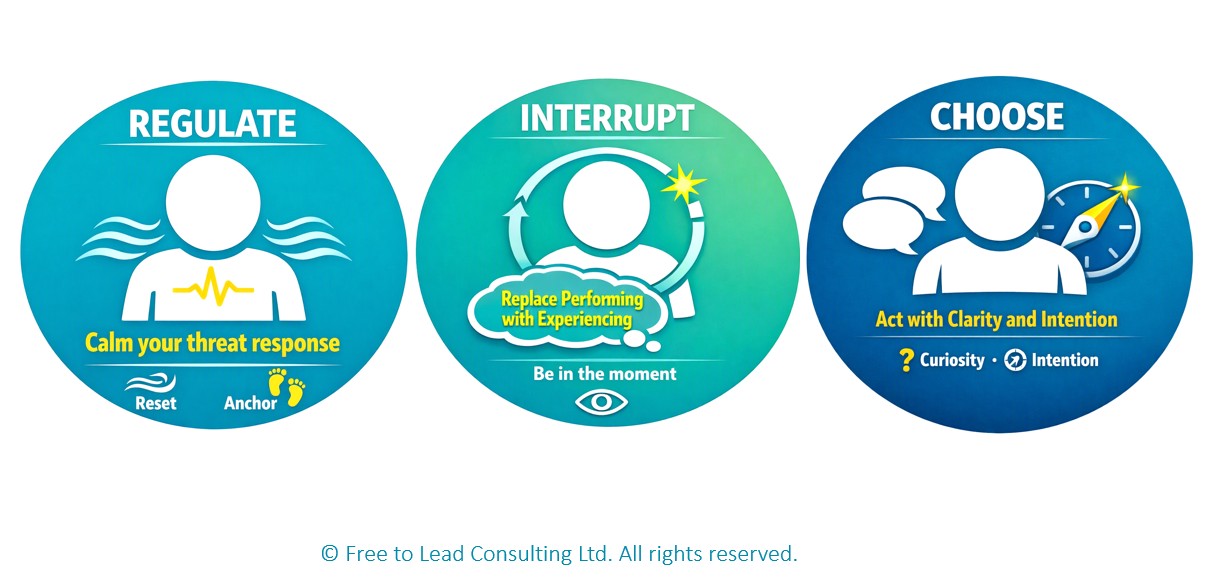
I invited the group to consider their own upcoming pressure moments and discuss how R‑I‑C could help them. The buzz in the room was terrific – and my own experience underlined the value of a meta‑learning moment like this. I often talk to clients about the benefit of being a participant‑observer: participating (presenting, influencing, discussing) while also observing yourself (physiology, emotions, thoughts) so you can be at your best and here I was experiencing just that.
If any of this feels familiar – the pressure moments, the inward thoughts, the drop in presence – I’d encourage you to try Regulate–Interrupt–Choose in your next real conversation or presentation. Small, intentional steps can make a meaningful difference to your confidence and impact.
If you’d like more tools like this, you can connect with me on LinkedIn where I regularly share practical ideas to help with clarity and confidence. If you’re not already signed up, you can join my monthly blog community and receive my free five‑day Clarity and Confidence reflection. It’s a short workbook designed to help you understand what influences your confidence as a leader. Each day offers a simple theme, a small piece of psychology and a short reflection to help you notice what’s happening for you and take a supportive step forwards in your work. If you’re looking to feel more grounded, more present and more impactful in the moments that matter, it’s a practical place to start.

Leave a Reply