

Image by Gerd Altmann from Pixabay
Having just come to the end of dementia action week, it seems an appropriate time to address some key thoughts around dementia in this month’s blog.
Let’s start with some facts
In 2015, an estimated 850,000 people were living with dementia in the UK. By 2021, it is estimated that there will be over 1 million people and 25 years from now something like 1.7 million. Approximately 1 out of 6 people over 80 get dementia .. that means it is likely that if it is not you or me it will be someone that we love who is close to us.
Dementia is still not widely understood by the ‘general public’. Many think it is a result of old age, however, dementia is not something that just happens to everyone as they get older. It is not a disease in itself but a word used to describe a group of symptoms that occur when brain cells stop working properly. Dementia is caused by different illnesses that impact the way that our brains work, for example, Alzheimer’s disease. Other types include vascular dementia and dementia with Lewy Bodies.
When a person has one of these illnesses, they may have problems remembering, thinking and speaking. They might say or do things that seem strange to others, and find it harder to do everyday things. They may not seem like the person they used to be. [Source: Quick Guide to Dementia]
Putting ourselves in the shoes of someone living with dementia:
I have become much more aware of the impact of dementia through seeing the impact on family members. Imagine how it must feel to know that your brain is not working as it used to, in finding that there are times when you can’t follow a train of thought, or can’t tolerate a volume of noise that has always been bearable, or can’t manage an activity that requires a sequence of steps and decisions like making a cup of tea.
Think about the multitude of decisions that you make every day, of the skills and knowledge that you have access to that enable you to fulfil your job requirements, of the pride that you feel in dealing with complex issues and seeing things through. How might you feel if this was no longer possible for you? I would suggest that it is a useful exercise to try to imagine this so that we can better support those living with dementia, as well as to recognise that which we currently take for granted in our day to day lives.
Wendy Mitchell was diagnosed with young onset dementia at the age of 58 in July 2014. She has shown tremendous courage and resilience in living her best life as she raises awareness and demonstrates by example that there is life after a diagnosis (read her honest and inspirational memoir, ‘Somebody I used to know’ to better understand what it takes to navigate the gradual changes that Alzheimers brings). She is helping to shake up stereotypical judgements and attitudes towards those living with dementia.
What can we do day to day to have a positive impact?
1. The first thing we can do is to take care about the way we talk about dementia.
We don’t make jokes about those living with cancer so why is it ok to do so about those living with dementia? There are so many phrases that relate to negative images of dementia which can make it even harder for those living with it to maintain positivity. While it might seem funny to label your 6 month trip around the world ‘Adventure before Dementia’ the hidden message here is that it is not possible to have adventures once you have dementia.
2. Treat everyone with dignity and respect.
When communicating with someone with dementia, we may need to give more time to enable comprehension, to speak in shorter sentences, to listen without interruption. We need to take care not to talk over them, infantalise them by speaking about them to another as if they were not there, or avoid them (people have been known to cross the street through fear of how they might need to interact when someone they know is newly diagnosed with dementia).
Just because someone has a diagnosis, it doesn’t make them a different person from the person they were the day before the diagnosis. While there may be some things that are more difficult for them, there are also many things that they are capable of doing.
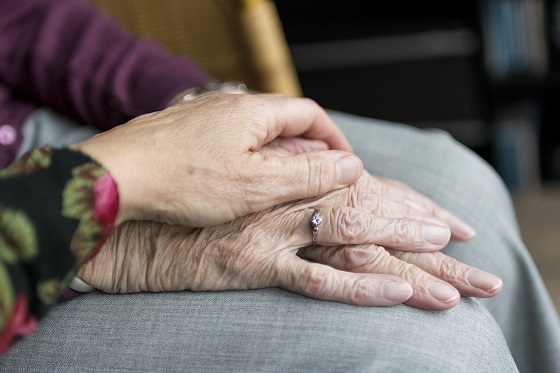
Image by Sabine van Erp from Pixabay
3. Try to understand
People with dementia can find it hard to communicate and put their thoughts into words. The brain tries to make sense of what it knows and sometimes words may be substituted or there may be long pauses because a word is missing in the vocabulary. Imagine how frustrating this might be and the fear and distress it might cause for the person trying to communicate. Sometimes this results in behaviours that we might not expect and keeping calm and patient can be so important even if it feels hard to do. Wendy Mitchell shares that she was once at a conference as a speaker and heard a previous speaker talk about the ‘challenging behaviours’ of people with dementia. She said it made her so sad that she rewrote a section of her speech and talked about the ‘challenging responses of health care professionals whose ignorant responses distress us’.
4. Remember that those with dementia will remember how you made them feel even if they can’t remember what you said or did.
Dementia can lead to someone not remembering a visit or what was said or potentially who you are when you visit. It is important to remember that a positive visit will still be remembered in terms of how it makes the person with dementia feel. For tips on how to prepare visitors and on how to interact for a positive experience see these useful tips.
I’m going to finish by quoting from Wendy’s book: “Dementia can be a lonely world to live in. It brings uncertainty, so that sometimes I don’t quite know what the world might be today. I miss feeling needed and necessary, and so I work hard to carve myself out a place.”
Let’s do what we can so that people with dementia know that they do have a place and that they are needed and necessary.

Leave a Reply