

We’re all adjusting to life being a little different at the moment whether as working parents who are trying to balance work with activities for their children, family mental health and being safe, or as carers of elderly relatives, or as employees getting used to connecting virtually to get things done, or as front-line workers facing unsettling emotions, long hours, and uncertainty. What we all have in common is a need to do the best we can for ourselves. By this, I mean managing ourselves such that we are more resilient in the longer term rather than less.
In this month’s blog I look at how taking the time to check in on our thinking and potential reframing can not only help now, but could pay dividends in the long term too.
Over the last couple of weeks every day seems to have changed our ‘frame of reference’ in some way, the most significant changes being when we’ve had restrictions on leaving the house and travelling as well as physical distancing. I’m going to start by briefly describing the effect on me before leading to some ways in which we can manage our response to such changes in at least a neutral way if not a positive one.
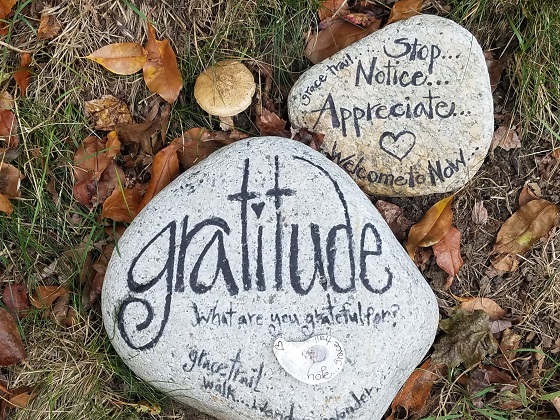
Firstly, thinking about the personal impact – If you’ve been following my blog recently, you’ll know that my Dad passed away at the beginning of February. I struggled at first with the realisation that I can’t support my Mum with her grief as I would have liked. She is in a care home. I can Skype once a week but it is not what I had previously imagined I would be able to do to support her. That being said, she is well cared for, at least I can Skype once a week, AND I can call in between the Skypes and I’m grateful for that. Taking a frame of gratitude helps me to see the positives instead of the negatives .. not all the time, every day.. but more often than not.
Professionally, the impact of Covid-19 hit organisations, some of my clients had to postpone coaching sessions while they focused on their organisation’s immediate response to the situation. Being self-employed, there was some anxiety at what this might mean and I had to do some self-coaching to consider Covey’s circle of influence model – where did I have influence and what could I control; I recognised that some clients were keen to continue coaching even more given the current climate, realising that it can help them with their own uncertainty and emotional regulation. I also pushed myself to step away from a short-term focus (survival) to a long-term focus (investment) making a choice to sign up to a Certificate in Team Coaching which I hope will support me in the longer term. This was a tough one – my instinct was to hunker down and hold on to what I have already.
What helped me to do this was my frame of reference for life which is about possibility – more on this in the step by step approach below.
An approach to help manage ourselves through mindset :
I appreciate that everyone has different circumstances and context so my suggestion would be to take on whichever part of the below that appeals to you and give it a try.
- The first step is to be aware of what is going on for you. This means scanning your thought processes to check in on your state of mind. How are you feeling? What’s driving those feelings? Do you feel stuck? How much can you control or influence?
- The second step is to consider 3 potential mind-traps – the 3Ps, Personalisation, Permanence, and Pervasiveness. If you are Personalising the situation it could be that you are putting blame and criticism on yourself. While we should take responsibility for our life, that’s not the same as blaming ourselves for everything. Recognise if you are taking on too much responsibility for a situation. Consider what you can learn from the situation and what you might do differently from here.
The Permanence mind-trap is when we tell ourselves things will always be this way e.g. “I’ll never be able to ..” rather than seeing something (a situation or our feelings) as temporary so that we can have a more positive outlook.
Pervasiveness is when you take one setback and extend it to all areas of your life. You might perceive that you’ve failed to handle a stressful situation well and then say ‘I’m a complete failure’. Aim to look at the situation objectively. - The third step is to consider your current Frame for life and consider a re-frame. I’m drawing on something I learned a long time ago from a programme run by Breakthrough – that sometimes we can have a filter or frame for how we see our lives which can hold us back. Imagine your life as a movie. What would the title of that movie be assuming it starts with ‘Life is…’. If your answer is ‘a struggle’ then the risk is that that’s how you filter in experiences in your life – to reinforce this framing. Life can look different if the frame is ‘Life is full of possibilities’ or ‘Life is an adventure’.
I saw a great reframe on Facebook this week related to the current lockdown situation in many countries. Instead of thinking ‘I’m stuck inside with my family’ how about instead thinking ‘I’m safe inside with my family’.
It’s not possible to fully support a resilient mindset through a blog but I hope I’ve given you some things to think about that could be useful. If you have tips of your own, please do share – I’d love to see them.

Leave a Reply