
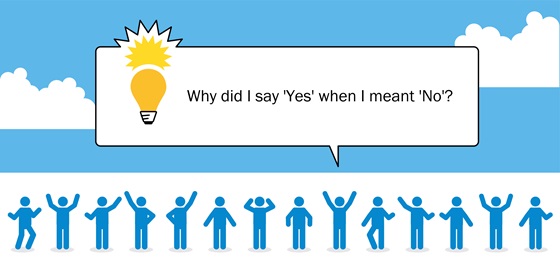
Do you find yourself giving way to others’ wishes or suggestions even when you’d rather do something differently or decide on a different way forward?
Giving away what you’d like in order to please others or to keep the peace is a surprisingly common issue brought to coaching sessions by some of my clients and, if not addressed, can result in resentment, pent up emotions, and missed opportunities in their lives.
So, what’s behind this, and what can you do about it?
Why don’t some of us assert our needs in certain situations?
Every person is different – with different values, experiences, traits, hopes and behavioural habits. As such, what stops one person from asserting their needs may be different from what stops another. In my experience of coaching people, common causes of not asserting needs include:
- Fear of upsetting the other person
- Avoidance of perceived, anticipated conflict
- Wanting to make the other person happy
- Believing that asking for what they want is unreasonable
Being assertive can be confused with being aggressive. Being assertive means speaking up for one’s rights without disrespecting anyone else’s. It involves managing stress, solving problems as they arise, and staying calm no matter how the other person reacts.

Image by Gerd Altmann from Pixabay
How can you improve your ability to be assertive?
Anne Dickson, author of ‘A woman in your own right – Assertiveness and You’ shares 11 rights applicable to all of us which often help to hone in on the types of situations where you may find it more difficult to be assertive.
These include, for example:
- Having the right to state my own needs and set my own priorities as a person independent of any roles that I may assume in my life
- Having the right to be treated with respect as an intelligent, capable, and equal human being
- Having the right to express my feelings
- Having the right to say yes or no for myself
- Having the right to make mistakes
You may find even reading this short selection that you recognise one or two that you are less comfortable with. It can be helpful to consider in what particularly contexts and with what people.
Here are 3 steps to support you in building assertiveness in situations that are important to you:
- Make a list of up to 10 situations where you would like to be more assertive and consider how you behave now in that situation – aggressively, passively?
- Review the list and put it in order of difficulty starting with the easiest
- Pick one of the easiest and consider how you’d like to interact to be more assertive in that scenario. Ideally, find someone you trust to test out how you’d interact and have them respond. When testing out, follow this guidance:
- Decide what it is you want or feel and say so specifically
- Stick to your statement and repeat it if necessary as much as required
- Assertively deflect any responses from the other person which might undermine your request
To deflect, you need to indicate that you’ve heard what the other person has said but without getting triggered by it taking you off track.
For example, consider the scenario where a colleague asks you to cover for them by attending a meeting in their place and you don’t’ have the time: when you tell them that you can’t they may say ‘That’s really disappointing- I can normally rely on you’. You could then respond by saying ‘I understand that you are disappointed, and I still have to say ‘no’’.
It takes time to build the muscle to be more assertive more often so it helps to practice in ‘safe’ situations where there is less at stake, for example where your coffee is cold and you’d like a hot one. As you gradually build a track record of being assertive, you’ll build more confidence to continue.
It’s a great feeling when you stand up for yourself in a way that respects the other person. Where could you benefit from this and what’s one small safe practice opportunity you could look for?

Leave a Reply