
Planning for the long term versus the short term, and working towards it may not be rocket science but it can be pretty hard to do sometimes, particularly when we have pressing urgent ‘NOW’ issues to deal with.
As business professionals and leaders, it is the longer term stuff that helps us make a greater difference, whether organizationally, or personally:
- By aiming for something aspirational that can change our future
- By enabling a better way of doing things that makes us more efficient and effective
- By investing in future opportunities, without a guarantee of return
6 months ago I had a really bad hockey injury – a hamstring tendon avulsion. I’ve had lots of sporting injuries over the years from a hairline fracture of the tibia, to 15 stitches in my lip and a tooth implant but none have had the impact that this one has.
And this happened just 2 months before my wedding so there were lots of activities that could have taken up my time and squeezed out space for rehab.
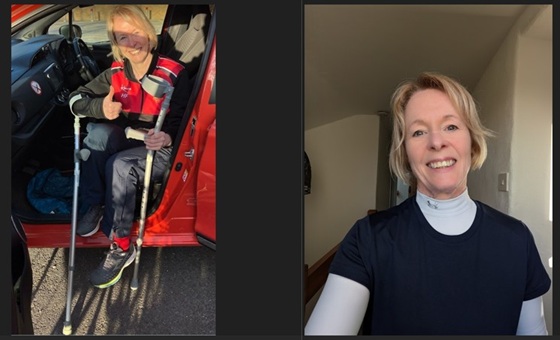
And yet this week, finally, I stepped back on the hockey pitch and I was able to train for 1.5 hours. Top of this blog are my ‘before and after’ photos .. with a 6 month journey in between. There is still a way to go to get back to the standard that I was before the injury but it felt good and it was the final milestone met of this first stage of my vision.
How did I do it?
- I set myself a vision .. one that I really wanted and could see the benefit of. Not only did I see myself playing hockey, but I saw me getting back into the Masters West of England side, fit, pain free, enjoying my sport.
- I did some research – what will it take to get to the vision? Who will I need to help me? What will I need to make time for? I got a good sports physiotherapist who recommended a scan which helped us know the starting point; I saw a specialist surgeon who could advise whether I needed surgery or not (both a surgical and non surgical route were possible and based on the data I had I chose non surgical .. for a start I wanted to be able to do the first dance at my wedding!)
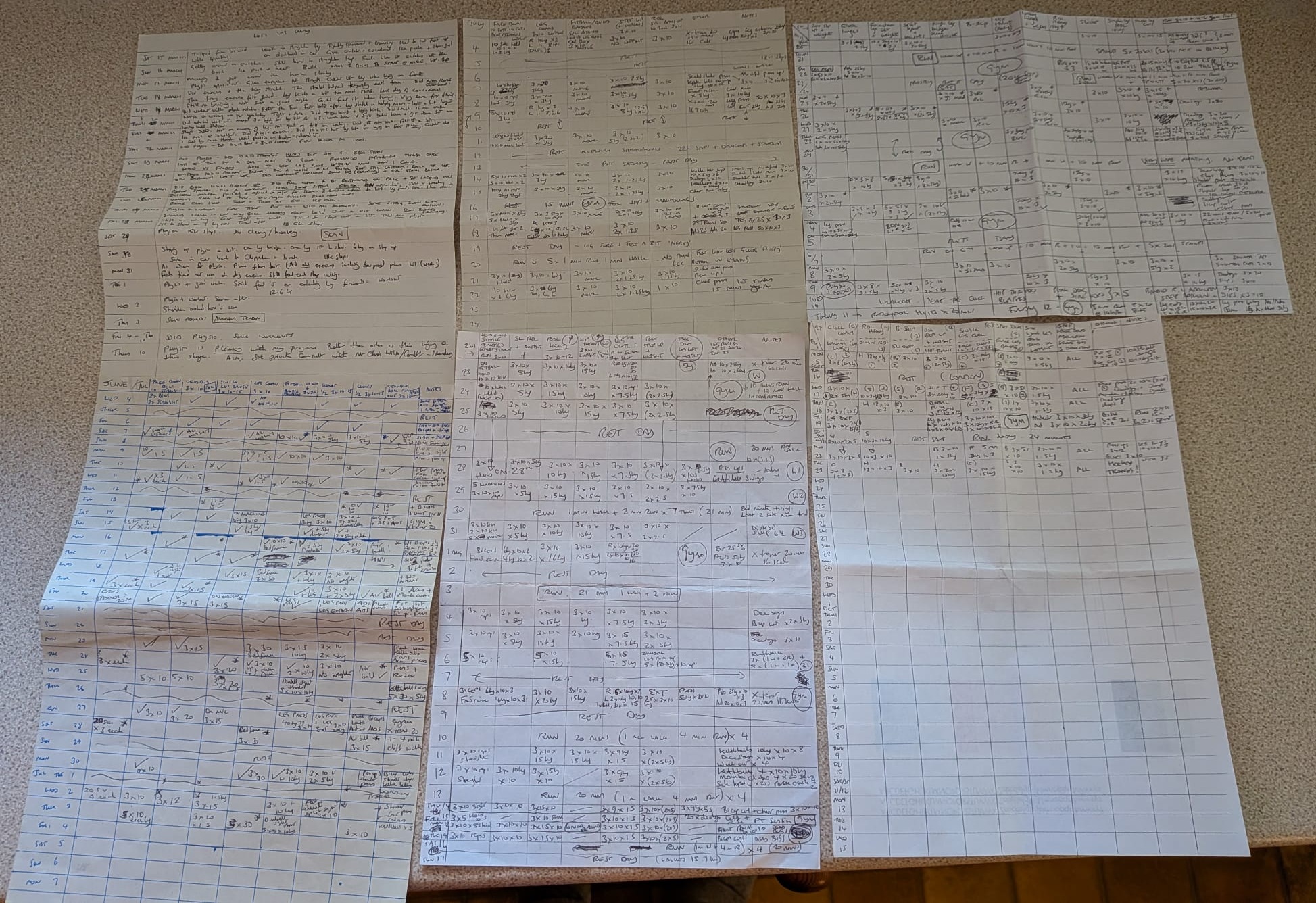
- I set milestones, I measured progress (both actions, and results) and had an accountability partner. I kept a basic diary of every workout, every gym session, every run .. the more I wrote down and saw my journey, the more motivated I was to keep it going. I also had regular physiotherapy sessions where my physio would test my gradually building strength and adjust the weight exercises for the next 3 week period. Below you can see the diary that I used to track progress.
- I got help when I needed it along the journey. Sometimes it was tough.. the feeling that I wasn’t making progress (I was but it was slow), the soreness from using the muscles a bit more than the last time. I missed the West tournament too. The help came from people who knew what it felt like.. being included in the WhatsApp group for the tournament, the check in messages from my team mates across the summer, as well as the occasional but wonderful sports massage.
- I celebrated successes and I regularly reflected on how things were going. I did most of my weight training at home but went to the gym once a week specifically to use the leg curl machine so that I could compare what I was able to manage with my left leg to that of my right. Every time I could add another 5 or 10kg was a definite win.
How does this translate for any of us, as business professionals and leaders, wanting to be more strategic and to work on what’s important for the longer term?
- Set yourself a vision – what are you aiming for? What does good look like, feel like, what will you see and hear? If this is for an organisation, involve those who will be on the journey with you.
- Do some research/diagnosis – where are you now? What needs to change? What don’t you know that will help you crystalise where you are going and what it will take to get there? Who do you need alongside you on the journey?
- Set milestones and measure progress – is this a personal journey such as a career target? Or an organizational change? Either way, ask yourself ‘What milestones will help me get there over what time scale?’ How often will I/we check in on progress?’ ‘What do we need to measure (now, and along the way)’
- Get help – who has done something similar before or understands the journey that you are going on? What tips do they have for you? Can you contract with them to be a support/mentor along the journey? Who has expertise that you don’t that will speed up your progress or ensure your efforts are directed effectively?
- Celebrate successes and reflect and learn – A long journey can sometimes feel like a hard slog. One benefit of setting milestones, over and above this being a great way to ensure you are going in the right direction, is that you can celebrate each one as you hit it .. and make sure you do for that boost of energy and motivation to then go after the next one. At each stage ask yourself ‘what went well that I can continue?’ and ‘what could be even better in this next stage?’
Is there a longer term vision that you want to go after? Or perhaps you are already on the journey? How could the questions in the 5 steps above help you?

Leave a Reply